
The Forest Is the Asset
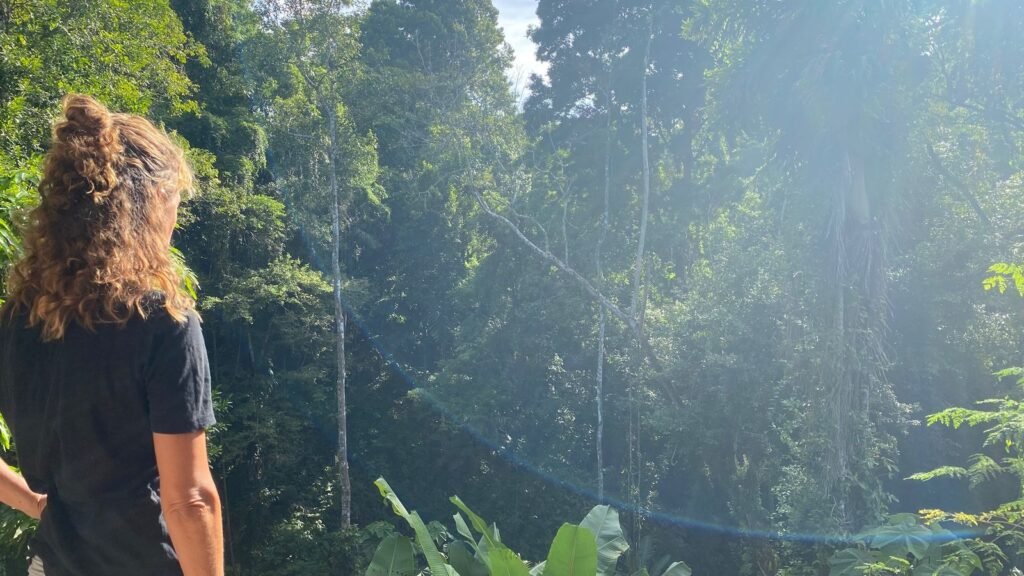
I haven’t needed an alarm clock in years. The howler monkeys in the canopy around my house on the Caribbean coast of Costa Rica do the job, and with more conviction than any device. Many of them arrived after the neighbouring plots were cleared for construction.
That detail sums up this essay. As the land around it is cleared, the forest that remains becomes the one everything else depends on.
A plan for seven, a decision for three
I bought this estate in 2020 intending to build seven homes. Years later I still live in the only house I have built here, sited on the part of the land that had already been cleared. The project is now planned as a micro-community of three.
The change didn’t come from a crisis of conscience. It came from living on the land long enough to read it. On paper the site was an abandoned cocoa plantation. After fifty years without interference it has become a dense, layered ecosystem. It isn’t primary forest in the legal sense, but it works like something close to it, and no developer could recreate it on any timeline they would accept.
Seven homes would have consumed it. Three can live inside it. And three homes inside a living forest are a different product from seven homes on a cleared plot. They are rarer and harder to replicate, and in my judgement they hold more value over the life of the asset.
Observation before intervention
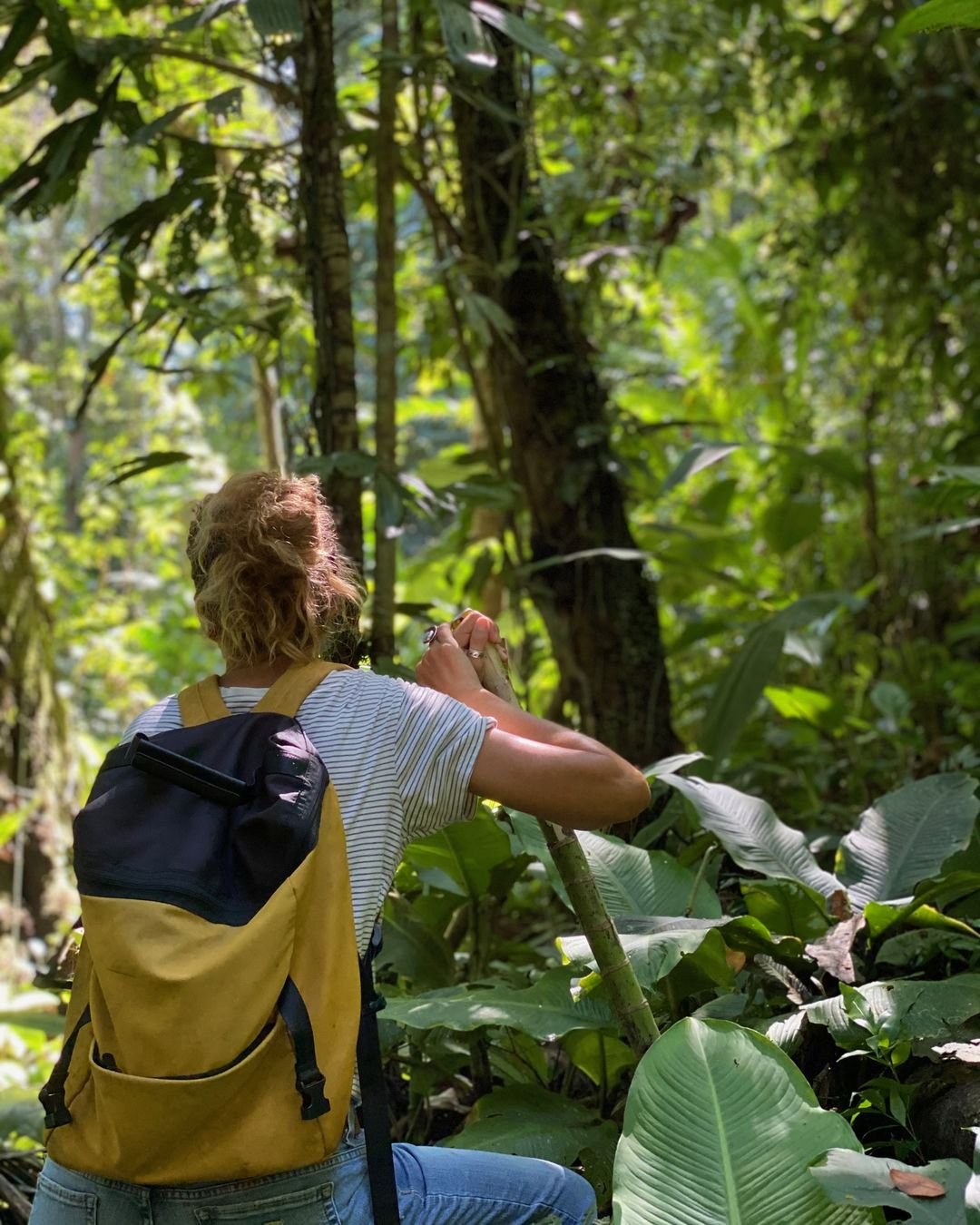
This isn’t the first time land has corrected my plan. On paper, nearly anything is buildable. On the ground, a site holds information no map carries: where water runs after heavy rain, where the wind lands, which slope stays cool at four in the afternoon, what is already growing there and why.
My method has always been to understand those elements (water, sun, wind, slope, what already grows) before a single wall is drawn, and only then decide where, and how much, to intervene. It is the oldest way of building there is. It fell out of use when housing development became an industry that treats landscape as a blank surface and architecture as a unit to be repeated.
This plot added something to that method: sometimes the right intervention is restraint. In twenty-five years of buying degraded land and bringing it back, it was the first time nature had finished the work before I arrived. My job was not to restore. It was to protect, and to fit a small human footprint into a system that was already working.
Why a mature forest behaves like a collector’s asset
Look at the forest the way you would look at any scarce asset.
The world’s stock is shrinking every year, and the decline is speeding up. New supply, for practical purposes, does not exist. A mature forest cannot be planted. It can only be allowed to grow back over decades, and at best preserved. Ecological time does not move at the speed of capital, and no amount of capital can compress it.
Shrinking stock, no production and a long lead time: that is the profile of a collector’s market. The conventional property market has not yet learned to price it. It still values land mainly by what can be built on it, not by what has been allowed to grow on it.
I expect that to change. A regenerated estate with native forest, productive gardens, well-designed water systems and thirty years of root depth is not something a buyer can commission next season. It can only be bought from someone who deliberately chose not to clear it.
Restraint as a design decision
Cutting the project from seven homes to three was a calculation, not a sacrifice. Leaving most of the land intact and designing carefully for the people who will live there creates more value (economic, practical and personal) than building on every last square metre.
I am not arguing for untouched wilderness. I went through a phase of ecological absolutism in my youth, and it served its purpose at the time. People occupy land; the question is how intelligently. My position is targeted intervention, designed to be handed on: a few well-placed homes, the forest as both buffer and principal asset, and water, food and energy systems that let the whole place run with little input.
The architect Bjarke Ingels calls this hedonistic sustainability: the better choice should also be the more pleasurable one. I would put it more plainly. Waking to the forest, swimming in a clean stream, eating fruit from your own trees: none of it is a compromise. It is one of the rarest forms of comfort left.
The privilege of continuity
The real luxury today is not more built space. It is the right to live inside something alive, and the decision that it should stay alive after you.
A forest only remains a forest because someone chooses not to turn it into something else. In a market where most owners choose the opposite, those who make that choice end up holding something very few others can offer. I am increasingly convinced that keeping habitable ecosystems intact will prove one of the soundest decisions of our generation, economically, ethically, and in the most practical sense of all.
