How I Search for Land
I will admit I have a thing with land. Wherever I go, I can’t help but investigate the state of affairs around it: what is available for purchase, and what isn’t, but could be. Over thirty years of exploring the tropics, and twenty-five of buying land, this has become a method. Here is how it works, and how it led me to the place I now call home.
Walking first
I walk around and find delight in little paths in the forest, walks along a cliff, often cross-country, in high boots and machete in hand. I try to understand the orientation of buildings, what the view from the windows might be, what the architect was looking for. I imagine the change of seasons, and what the forest, or farm life, might become along the way. I look for elevation, breeze, sunsets and sunrises, canopies, and even the sound of waves.
One would be surprised at how much information comes from simply walking around in silence, observing, being in and feeling a place. This instinctive reading is, I believe, where the secret of my success with land comes from.
Then, conversations
An important part of the process is starting little conversations with passers-by, somebody tending a horse, somebody going for a walk; having a coffee at the local café and starting random conversations about local life, leading to questions about this farm or that ruin I saw. It is surprising what one can learn simply by being interested. From there, someone connects me to somebody else who is selling, or might be interested in doing so.
Then, the homework
I research realtor offerings, get to know land and construction prices, and assess the risks and possibilities of a place and its political and social context: in other words, its potential for a buyer. If a place passes through enough of my filters, the search goes deeper. Many times it does not. And yet those investigations always stay with me, in my mind and in actual archives, because one never knows what a client, or oneself, might need some time in the future.
Live in the place before you buy
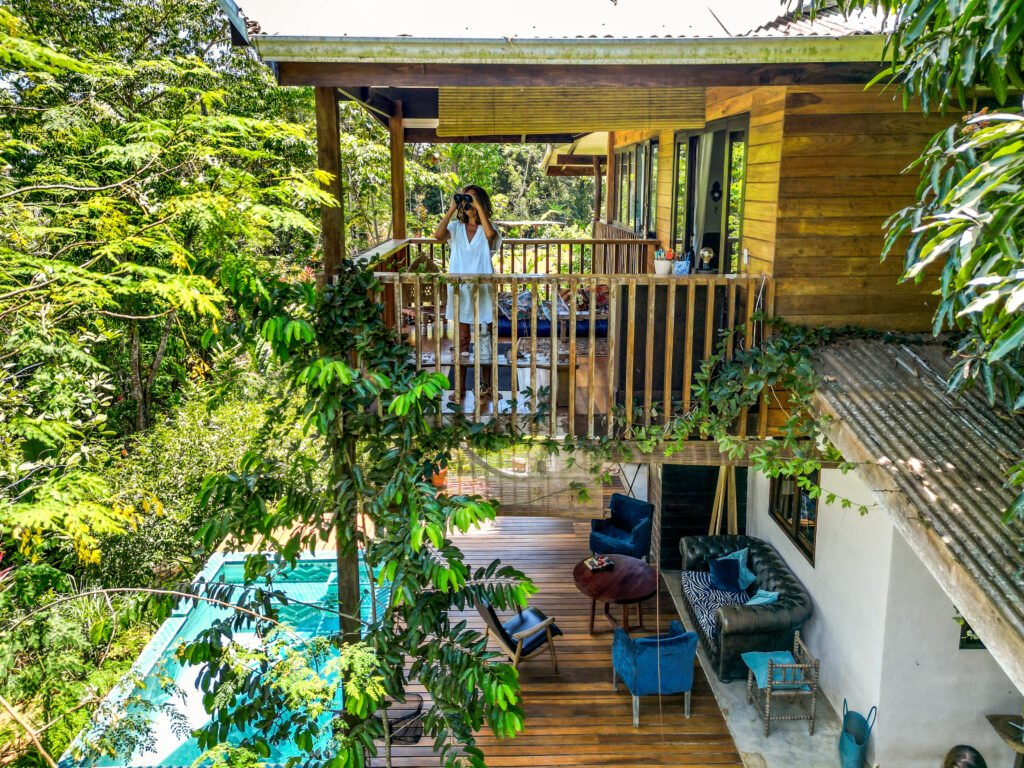
When I was younger, I did a lot of house-sitting to understand which houses worked and which didn’t, and why. In Costa Rica I rented five houses with my kids before buying, exploring different areas and different ways of building. The lessons:
- Outdoor kitchens are lovely, until raccoons loot your pantry at night and play with your compost.
- Huge shutters instead of windows are gorgeous, and expensive in insect bites.
- Roofs need much larger overhangs to deal with the rain.
- Well water can tint your hair ginger unless you filter it properly.
- Gorgeous trees might fall on your roof if they’re close enough.
What I was looking for in Costa Rica
- Far enough from the road not to hear it
- Close to the ocean, if the piece was small
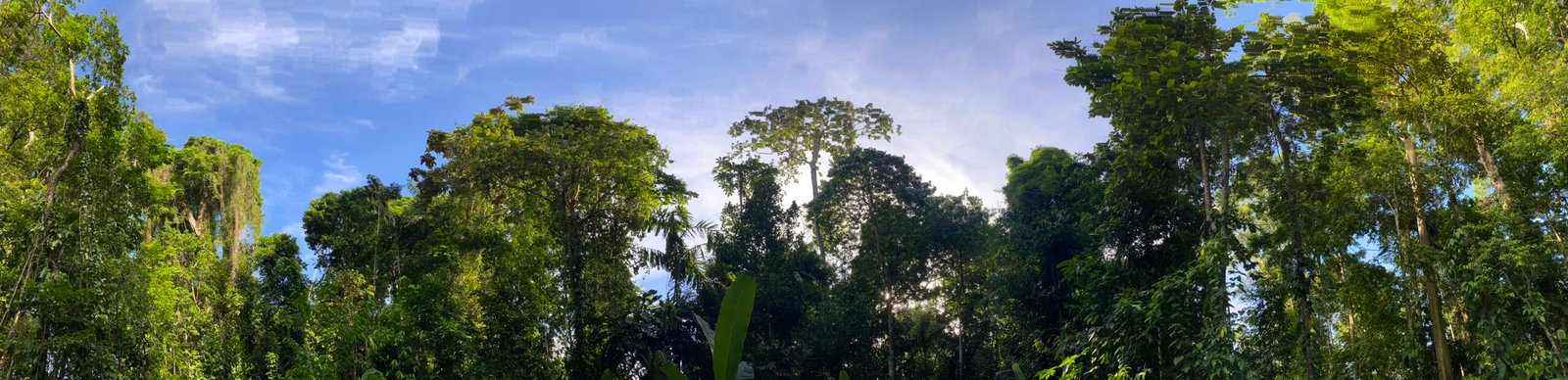
- Original trees, some forest, and hence wild animals
- Elevation, for the breeze, fewer mosquitoes, and privacy
For six months I visited fincas from twenty hectares to seventy, and got to know pretty much all the land for sale in the area. None of it was a sure yes.
How I found it
The land I bought never reached a listing. My two horses kept running away; I asked a local man for help, and he was busy clearing paths on a property on a hill I already loved. Two days later, the man who looked after that land told me the owners had decided, the day before, to sell.
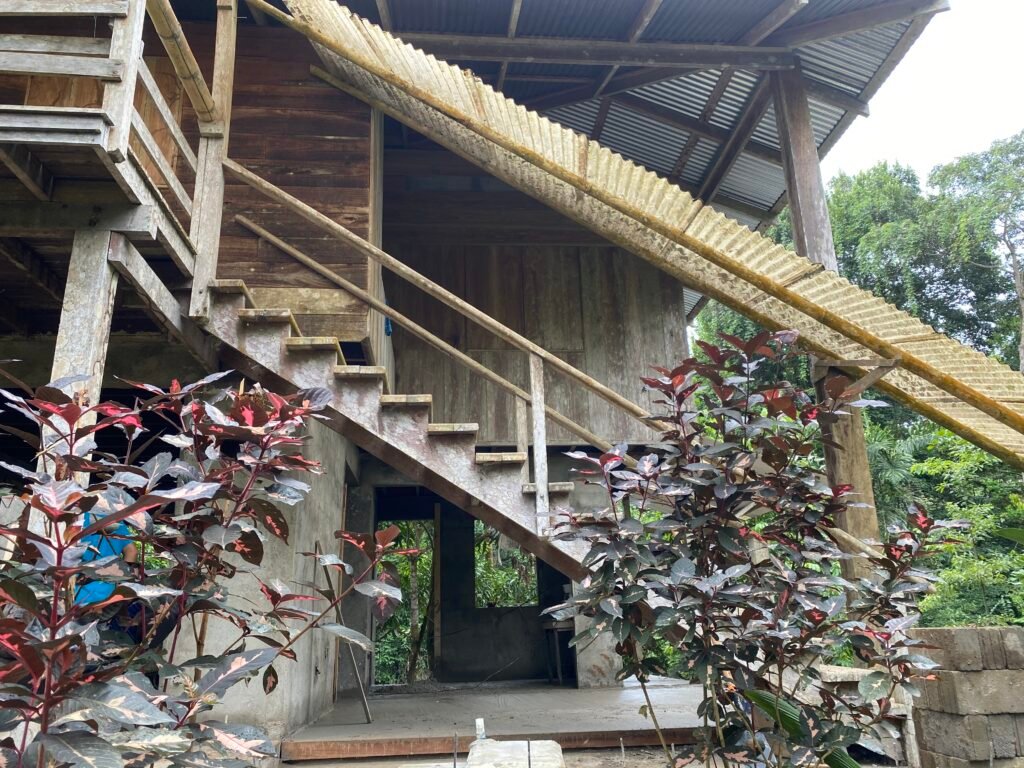
Three hills, like three little muffins, with two streams joining between them. An old cacao plantation, abandoned for half a century, grown into jungle, with spider monkeys overhead and the murmur of the ocean four or five hundred metres away. In one corner, a little wooden house full of bats and old love letters. The next day a fer-de-lance was waiting in its living room, and drew a circle of venom around herself like an ensō. I sat on the stairway eating rambutans, and knew: this was it.
Later, I went ahead and rebuilt the casita, more or less doubling its size while recovering every single piece of hardwood I found.
What I checked before buying
- The chain of ownership, back to the original finca
- Title, with lawyers and the municipality
- The neighbours
- Existing access, and the possibilities for an inner road
- Electricity, internet, and self-sufficient water systems
- Existing topographic maps and the old master plan
- The boundaries: measured, but not with GPS, so I bought knowing I would re-measure and might lose some metres
Why I do it this way
Since then, prices around here have skyrocketed, and a lot of forest has disappeared in front of my eyes in the name of development. That is not what I do. My goal is to create small communities that preserve the land, not to strip it of everything it has.
Land searching is probably my biggest passion: my favourite sport, adventure, and anthropological, mystical and cultural practice. I do it for myself and for clients alike. Should you have a land hunt in mind, take a look at how we can work together. It will be my absolute pleasure to run this adventure for you.